Rural Women Stories | Muazu Africa
Active Now
Women-Led Consultation Line — Latest GESI-focused intervention for rural women enterprise owners.
Facilitated by a woman consultant · Response within 24hrs · WAT business hours
English Hausa Yoruba Igbo
Start WhatsApp Consultation
SUMMIT IN 2 DAYS → Gender Impact & Investment Summit 2026 · May 14, 2026 71 enterprises audited under RVR + GESI · 5 thematic tracks across Nigeria 545 downloads — GESI Guide: Understanding Gender and Structural Power Dynamics Tolulope Makinwa — Oral Presenter at Gender Impact & Investment Summit 2026 Nominate a rural woman founder — info@muazuafrica.org — Subject: #RuralWomenStories SUMMIT IN 2 DAYS → Gender Impact & Investment Summit 2026 · May 14, 2026 71 enterprises audited under RVR + GESI · 5 thematic tracks across Nigeria 545 downloads — GESI Guide: Understanding Gender and Structural Power Dynamics Tolulope Makinwa — Oral Presenter at Gender Impact & Investment Summit 2026 Nominate a rural woman founder — info@muazuafrica.org — Subject: #RuralWomenStories
International Year of the Woman Farmer #RuralWomenStories

Rural Women Stories


Documenting women who feed, heal, power, and educate Nigeria’s rural economies — with economic rigour and dignity.
545
Downloads
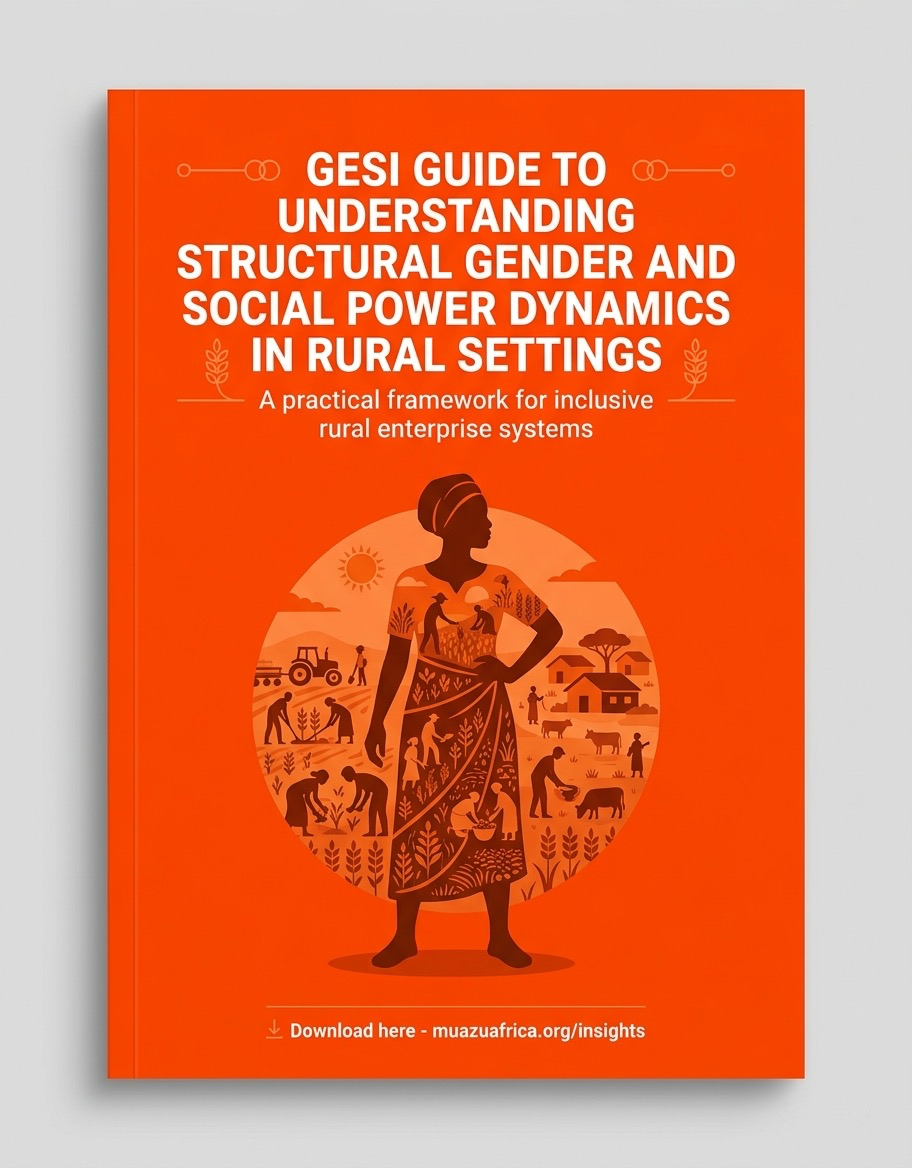
Understanding Gender and Structural Power Dynamics in Rural Settings
Tolulope Makinwa, Executive Director · Muazu Africa · Free GESI Guide
DFIs ESOs Policymakers Investors
GESI Guide Cover
Download Free
Portfolio Overview — tap a card for details
+
60–80%

Women’s labour in rural food production

60–80% of all rural food production labour is provided by women, yet fewer than 14% hold land titles that let them access formal financing.
+
<14%

Agricultural land held by women

Despite contributing majority agricultural labour, women own less than 14% of agricultural land — limiting collateral, input access, and formal financing.
+
71

Enterprises audited via RVR + GESI

71 enterprises fully audited using RVR framework with GESI lens — measuring ownership stakes, pricing authority, capital access, and decision rights.
+
₦25M+

Value retained in communities

Over ₦25 million in community value retained through RVR diagnostics — identifying and closing leakage points in aggregation, processing, and market access.
By Thematic Track — tap a track for details
Agriculture 38 Women-led enterprises
38 women-led agricultural enterprises audited across 11 states. Primary leakage: aggregation access & pricing authority. 72% women-led.
Health 12 Community health enterprises
12 rural community health enterprises in underserved LGAs. Primary leakage: capital access for equipment. 75% women-led.
Climate 9 Climate-adaptive enterprises
9 climate-adaptive enterprises led by women in drought zones. Primary leakage: market decision rights. 66% women-led.
Energy 7 Renewable ventures
7 women-owned renewable energy ventures serving off-grid communities. Primary leakage: ownership formalisation. 57% women-led.
Education 29 Education cooperatives
29 rural education and value-addition cooperatives. Primary leakage: margin control in value addition. 69% women-led.
Tap any card to expand details
Events & Programmes — May 2026

What’s Coming — Don’t Miss It

In 2 Days
May 14, 2026 — Lagos
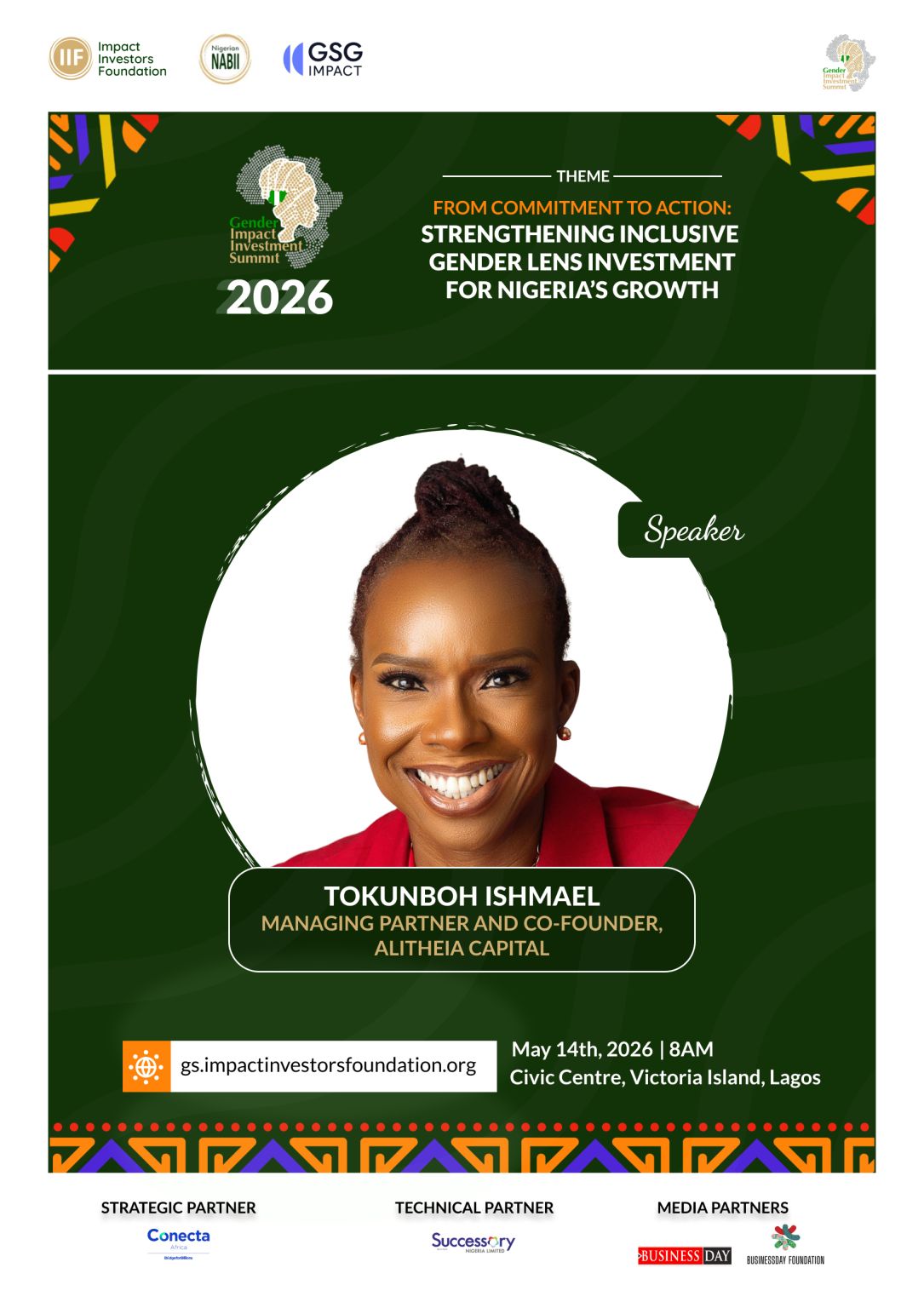
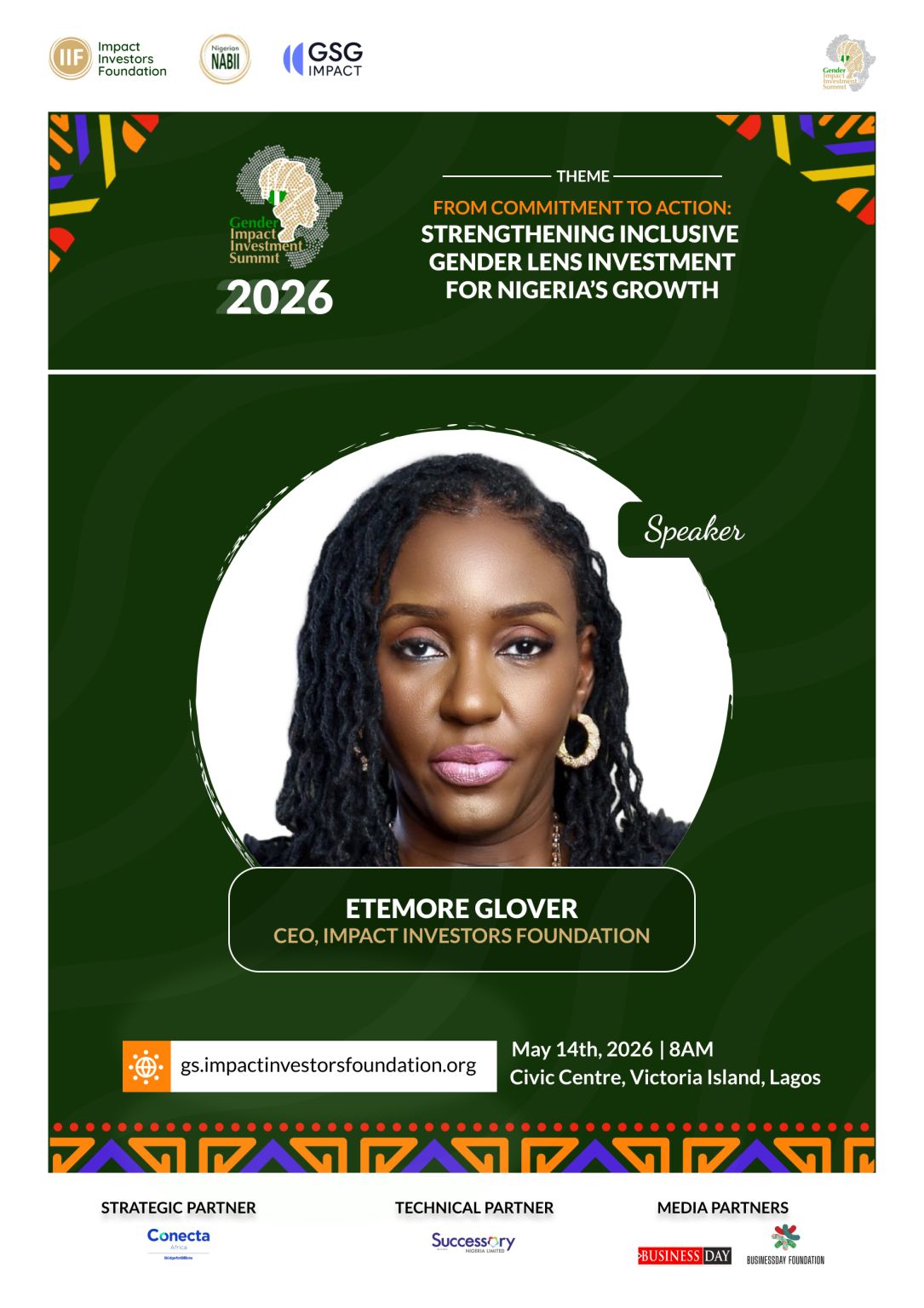
Gender Impact & Investment Summit 2026
Civic Centre, Victoria Island, Lagos — Oral presentation on gender and power dynamics in rural settings.
Q2 2026 — Virtual + Hubs
Rural Women Founders Lab — Cohort 3
3-day intensive: investment readiness, RVR assessment, and DFI referral network access. Certificate available.
May 21, 2026 — Virtual
Investment Readiness for Rural Women Founders
Document your enterprise, structure your financials, and present to institutional funders. Open enrolment, Cohort 3.
May 28, 2026 — Open Intake
RVR Scorecard — GESI Track
Apply for full enterprise diagnostic. Receive structured report on value chain position and capital readiness.
May 2026
West Africa Time (WAT, UTC+1)
Loading…
Su
Mo
Tu
We
Th
Fr
Sa
14
May
Upcoming
Gender Impact Summit
21
May
Training
Investment Readiness Cohort 3
28
May
Intake
RVR Scorecard GESI Track
WEPs Signatory — Verified
Women’s Empowerment Principles — UN Global Compact
Muazu Africa is a verified WEPs Signatory, committing to advance gender equality and women’s empowerment in the workplace, marketplace, and community.
View our WEPs Profile →
Gender Impact & Investment Summit 2026

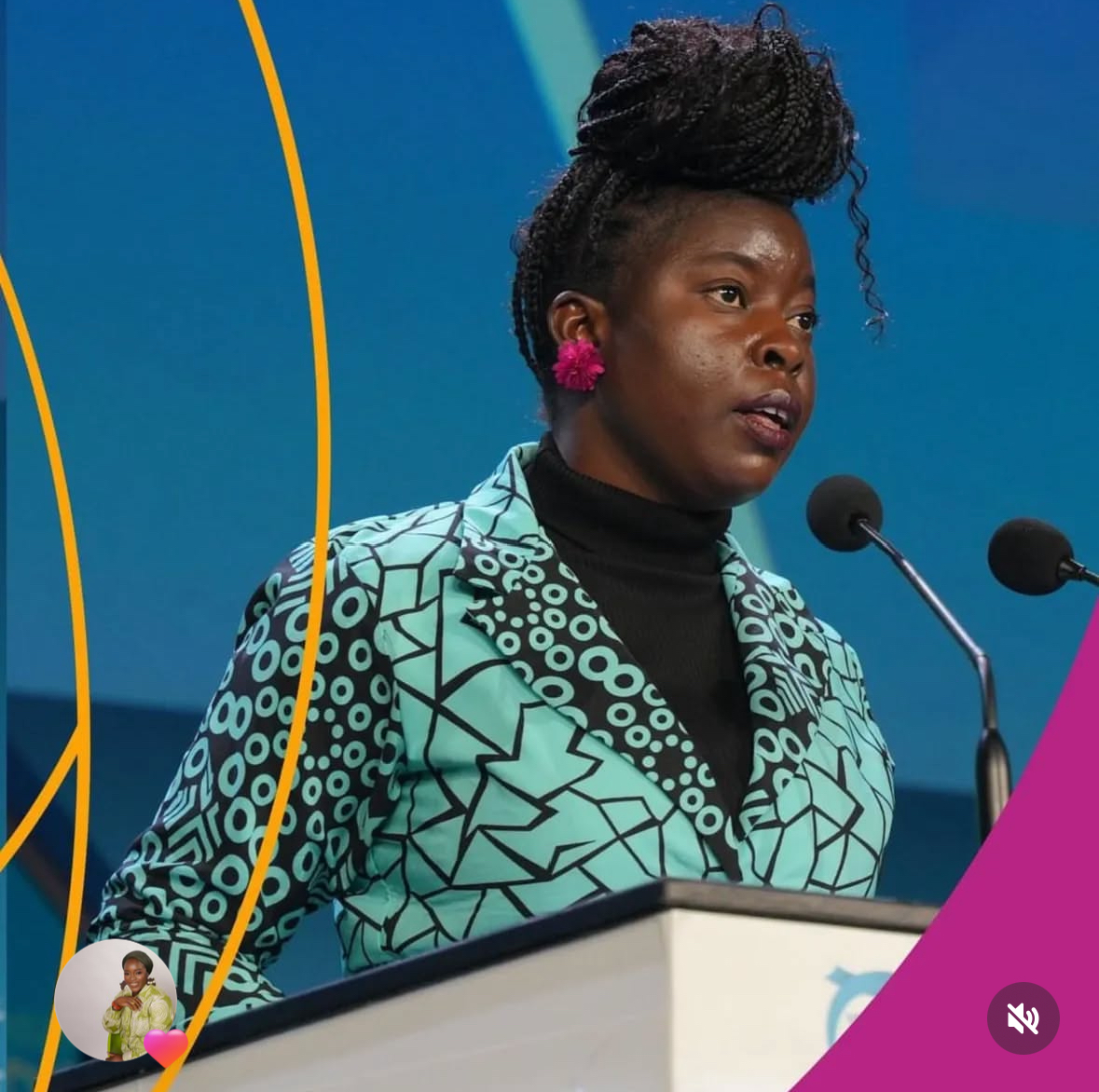
Muazu Africa at the Summit — Today

Oral presentation on gender and power dynamics in rural settings. Bringing the RVR + GESI framework to Nigeria’s premier gender-lens investment conference.
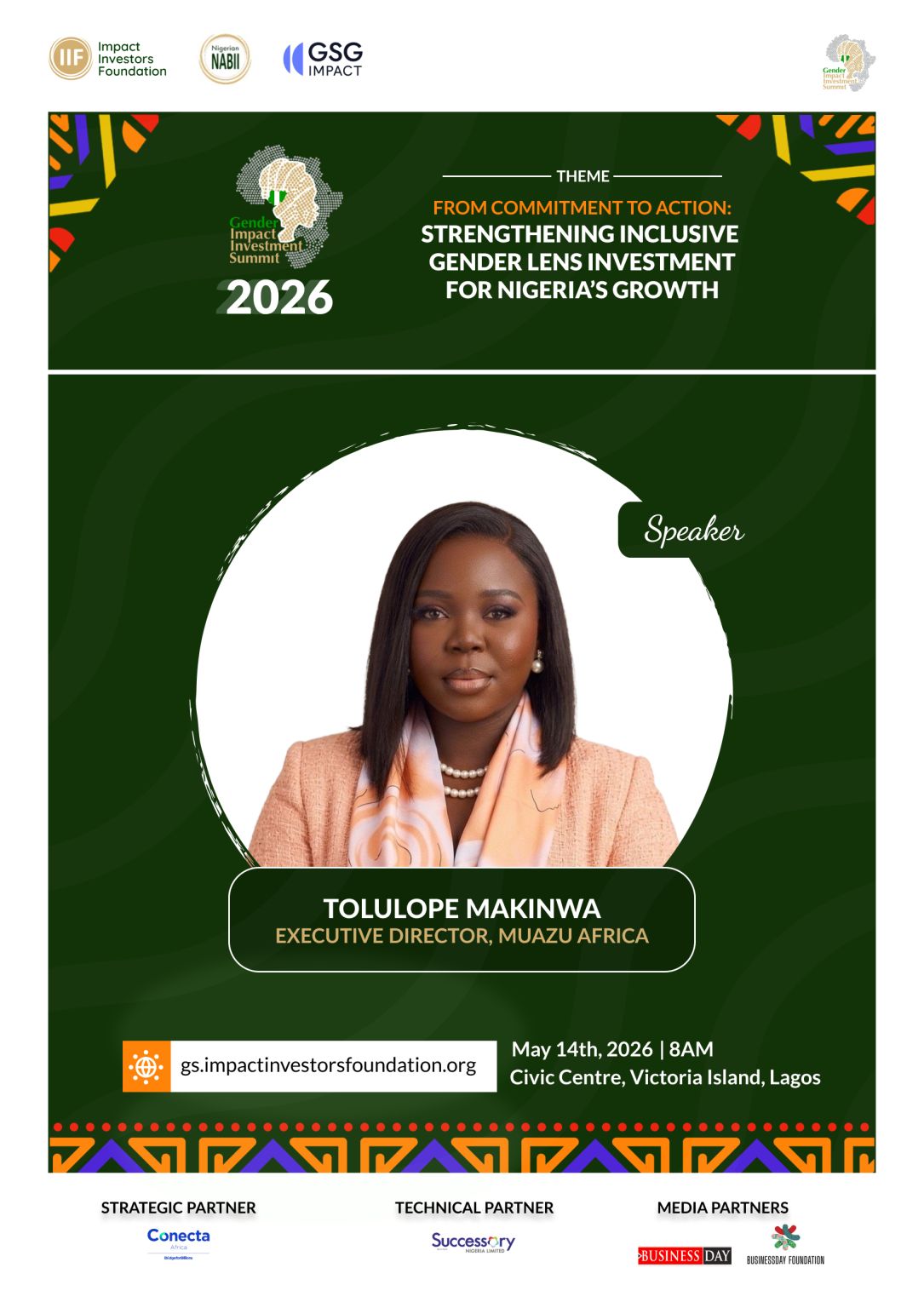
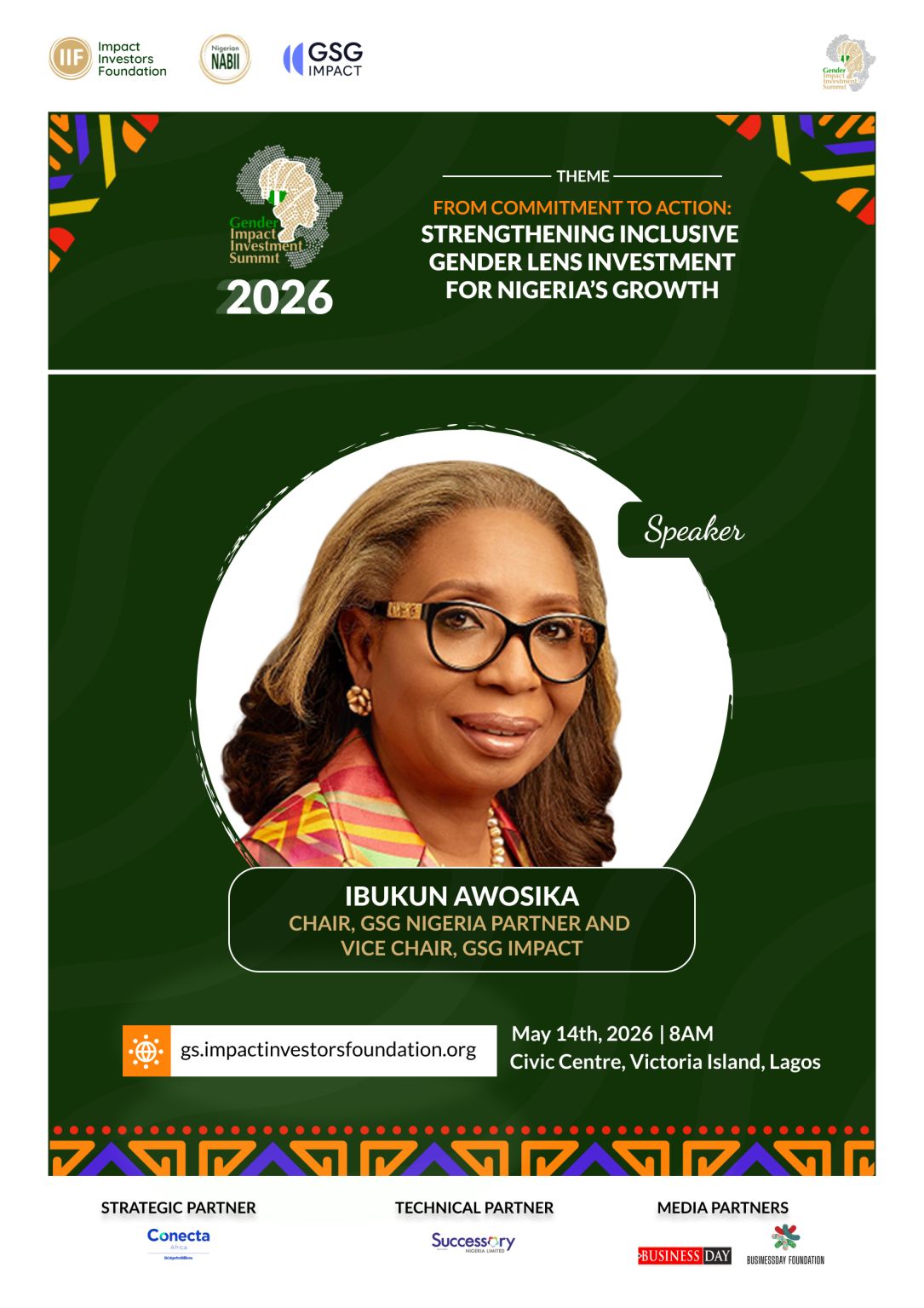
DateMay 14, 2026 — In 2 Days
VenueCivic Centre, Victoria Island, Lagos
PresenterTolulope Makinwa
FocusRVR + GESI Framework
GESI Commitment — 2X Global Aligned

Our Gender Equality & Social Inclusion Framework

Muazu Africa is aligned with 2X Global criteria and actively building toward certification. Our GESI architecture is intelligence-led, publicly disclosed, and embedded across every programme we deliver.

Four GESI Pillars
01

Strategic Commitment

Muazu Africa exists to make rural women’s power visible and investable. Our intelligence-led diagnostics and GESI lens are built around this — not appended.

02

Management Systems

All diagnostics are gender-disaggregated. We measure women’s position in value chains — ownership stakes, decision rights, and control over pricing and margin.

03

Data & Disclosure

We track % women founders, leaders, and employees across 71 audited enterprises — disaggregated by thematic track, state, and enterprise type.

04

Safeguarding

Zero tolerance for GBV and harassment across all programmes. Muazu Africa operates a formal safeguarding policy across every community liaison touchpoint.

GESI Infrastructure Lines — Active & Coming

Inclusive Data Systems Fund

A dedicated budget line for gender-disaggregated data collection, GESI scorecards, and women’s enterprise intelligence — aligned to 2X Global and IRIS+ metrics.

Coming Soon

Disability Accessibility Line

Structured accommodations across all training, consultation, and diagnostic touchpoints — ensuring women with disabilities are included in enterprise development pathways.

Coming Soon

Safeguarding Framework — Public Disclosure

A dedicated safeguarding policy and reporting mechanism for all Muazu Africa-affiliated programmes. Public disclosure Q3 2026.

Women-Only Consultation Processes

Formal, dedicated consultation spaces — where women’s voices are collected without the influence of mixed-gender power dynamics.

Rural Women Stories

Five Women. Five Verticals. One Economy.

These founders represent millions of women whose economic contribution is systematically undercounted, undervalued, and underfinanced across Nigeria’s rural corridors.

Evidence-Based Advocacy

Structural Power: Validating Rural Women’s Realities

NBS data and related studies confirm significant gender disparities in rural Nigeria that align with Muazu Africa’s framework of structural power for rural women. These findings validate the systemic barriers to economic agency documented in our Rural Women Stories.

Rural women face interlocking barriers across four critical dimensions that determine their economic agency. National Bureau of Statistics data—combined with FAO and state-level research—reveals the scale of structural inequality that makes women’s enterprise invisible to formal systems.

01

Land Ownership & Collateral Access

8–10%
Women landowners in Nigeria

Despite rural women comprising 60–80% of agricultural labor, only 8–10% hold land titles. Women often have use rights but lack formal ownership—limiting collateral for credit. Only 6% of rural women access formal loans, compared to significantly higher rates for men.

Men’s plots: 14% more valuable
Sell rights gap: 19%
Collateral gap: 9%

In Southwest Nigeria (Ogun study), 78% of rural women report low bargaining power over land, especially in polygamous households (19% access vs. 61% in monogamous settings).

Source: NBS-linked surveys, FAO Gender and Land Rights Database
+
02

Essential Time to Service & Time Poverty

2.5x
More unpaid care work than men

Rural women spend 2.5 times more time than men on unpaid care and domestic work, per NBS Time-Use Survey data. This time poverty—an imbalance between productive and care activities—reduces economic productivity and heightens poverty vulnerability.

Impact: Less time for market engagement
Result: Lower income generation
Cycle: Perpetuates economic exclusion

Women prioritize household service over market engagement—not by choice, but by structural expectation. Time poverty is an invisible tax on women’s economic potential.

Source: NBS Time-Use Survey, Gender Statistics Report
+
03

Intra-Household Dynamics & Decision Power

21.1%
Rural households female-headed

NBS General Household Survey-Panel shows 21.1% of rural households are female-headed (a recent increase), yet women face persistent bargaining gaps in decision-making over land, income allocation, and asset bequeathing—heavily influenced by marital status.

Labor contribution: 60–80%
Land decision rights: Minimal
Income control: Limited

Plots managed by women lack secure rights, perpetuating control by men despite women providing the majority of agricultural labor. Marriage type, household structure, and customary norms shape access patterns.

Source: NBS GHS-Panel, SAGE Journals Gender & Land Study
+
04

Aggregate Structural Imbalance

70%
Agricultural labor by women

NBS reports (including Women and Men in Nigeria 2022) and GHS-Panel data underscore structural imbalances across all sectors. Rural women are central to agriculture—providing 70% of labor—yet remain systematically marginalized in asset ownership, credit access, and decision-making authority.

Labor: 70% contribution
Asset ownership: <10%
Formal credit: 6% access

The data confirms what Rural Women Stories document: women’s economic power is systematically extracted, undervalued, and made invisible to formal systems—requiring structural intervention, not charity.

Source: NBS Women and Men Report 2022, GHS-Panel Analysis
+

Structural Power Dimensions: Evidence Summary

Dimension Key Statistic Impact on Economic Agency Source
Land Ownership 8–10% women landowners No collateral → 6% formal credit access NBS, FAO
Time Poverty 2.5x unpaid care work Reduced market engagement & income NBS Time-Use Survey
Household Power 21.1% female-headed HH Limited decision rights despite 60–80% labor NBS GHS-Panel
Aggregate Gap 70% agric labor by women Marginalized in assets, credit, decisions NBS Women & Men 2022

From Evidence to Action

Muazu Africa uses this evidence base to structure our Gender Equality and Social Inclusion (GESI) framework and Gender-Lens Investing (GLI) advocacy. We don’t document stories for sentiment—we document them to build the data infrastructure that makes rural women’s economic power visible, measurable, and investable.

2X Global Alignment Disclosure

Where We Stand — and Where We Are Headed

Disclosure Statement

Status: 2X Global Aligned — Pre-Certification. Muazu Africa integrates 2X Global threshold criteria into our enterprise diagnostics, GESI data collection, and programme design. Formal certification is in progress.

01

Leadership

Women in leadership across Muazu Africa’s team, advisory board, and portfolio enterprises. Executive Director is a woman.

Active · Tracked
02

Ownership

RVR framework measures women’s ownership position across 71 audited enterprises. We track equity stake, pricing authority, and capital retention.

Active · RVR-Measured
03

Employment

We track % women employees, unpaid labour contributors, and value chain participants disaggregated by role and income tier.

Partial · Expanding
04

Workplace Standards

Zero tolerance for gender-based violence and harassment. Safeguarding policy active across all field activations.

Active · Policy Live
05

Community & Value Chain

RVR + GESI diagnostics trace structural barriers women face in aggregation, processing, financing, and market access.

Active · RVR-Integrated
06

Data & Governance

All diagnostics are gender-disaggregated. GESI data embedded in RVR scorecard and enterprise profiles. Governance structure in development.

In Progress · Q3 2026
WEPs Signatory GESI Integrated RVR Certified

Muazu Africa is a Women’s Empowerment Principles (WEPs) Signatory and integrates GESI across its rural enterprise development, investment readiness, and value chain programmes. All diagnostics are gender-disaggregated and built to meet DFI GESI threshold requirements.

View WEPs Profile
#RuralWomenStories Campaign

Documenting the Invisible Architects

Building Nigeria’s first structured archive of women-led rural enterprise, documented with economic rigour and presented with dignity.

Nominate a Woman

Your nomination builds a permanent record of her economic contribution.

Send an EOI to info@muazuafrica.org — subject line: #RuralWomenStories Nomination

Required Information

300-word bio — in her own voice where possible
Photo — minimum 1MB
Organisation — name and type
Thematic area — Agriculture, Health, Climate, Energy, or Education
Location — State and LGA
Impact highlights — jobs created, revenue range, reach