These Rural Women Handle Farm Waste Differently
Across rural economies, agricultural by-products are often treated as waste long before their economic value has been exhausted. Muazu Africa is working with rural supply networks to change that — connecting agricultural biomass to aggregation, markets and new opportunities for value retention.
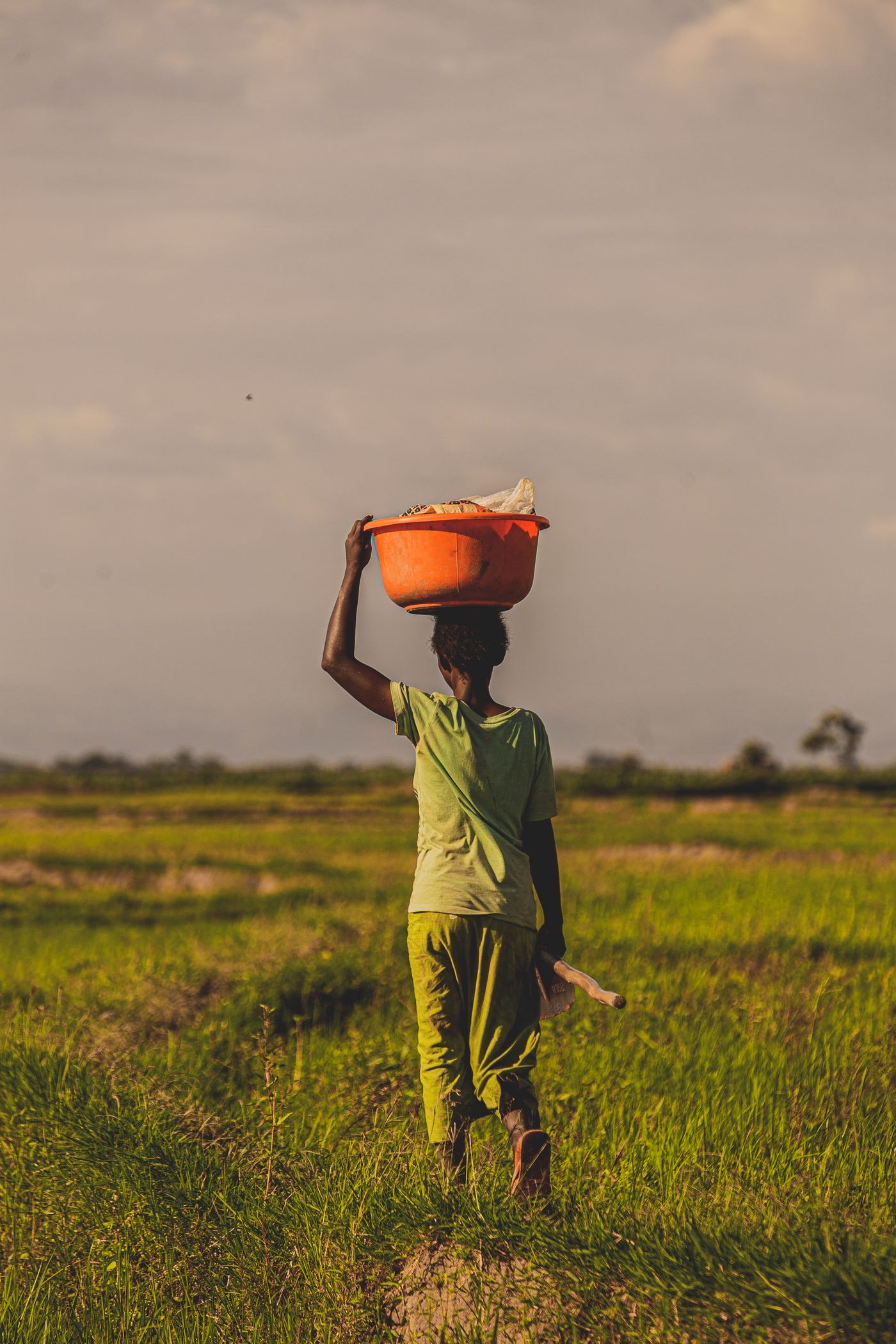
FARM → BIOMASS → COLLECTION → MARKET
What happens to the part of the harvest nobody buys?
When we talk about agriculture, we usually talk about what leaves the farm as a product — rice, sugarcane, coconut, groundnuts. But every production system also leaves something behind: husks, shells, bagasse, stalks, and other agricultural by-products.
These materials are often treated as waste because there is no reliable system connecting the place where they are generated with the people and industries that can use them. That is where the opportunity begins.
Biomass is not automatically waste. It can become a feedstock, an input for processing, an energy resource, a material for biochar and, where appropriate and independently verified, part of a wider climate-finance opportunity. The missing piece is often not the material — it is the infrastructure that stands between it and its next economic use.
The women already doing the work
Across rural value chains, women are already involved in production, processing, aggregation and trade. They are often closest to the material. They know where it is generated, when it becomes available, and how the seasonality moves. They are the ones who move it.
But proximity to an asset does not necessarily mean ownership of its value. A farmer can produce a valuable agricultural by-product and still have no reliable buyer. An aggregator can collect biomass without adequate storage. A community can hold significant quantities of agricultural residue without a collection point capable of preparing it for a larger market.
- How do we build a market around what rural economies already produce?
Biomass is not automatically waste.
It is an asset waiting for infrastructure
From farm residue to biomass
Muazu's approach begins with a simple principle: retain more value where rural value is created. That means looking at agricultural by-products differently — not as an isolated waste problem, but as a supply chain in its own right.
- Where is the material generated, and who handles it?
- How much is available, and when is it available?
- How can it be aggregated, stored, and quality-checked?
- Who needs it — and what infrastructure moves it from farm to market?
This is the thinking behind Muazu Markets and our growing biomass aggregation infrastructure.
Ogun State: a collection point for the next market
Muazu Africa's Ogun State biomass collection centre is now open to verified buyers. Rather than asking buyers to navigate fragmented rural supply on their own, the collection-centre model creates a physical point around which biomass can be aggregated, documented and connected to market demand.
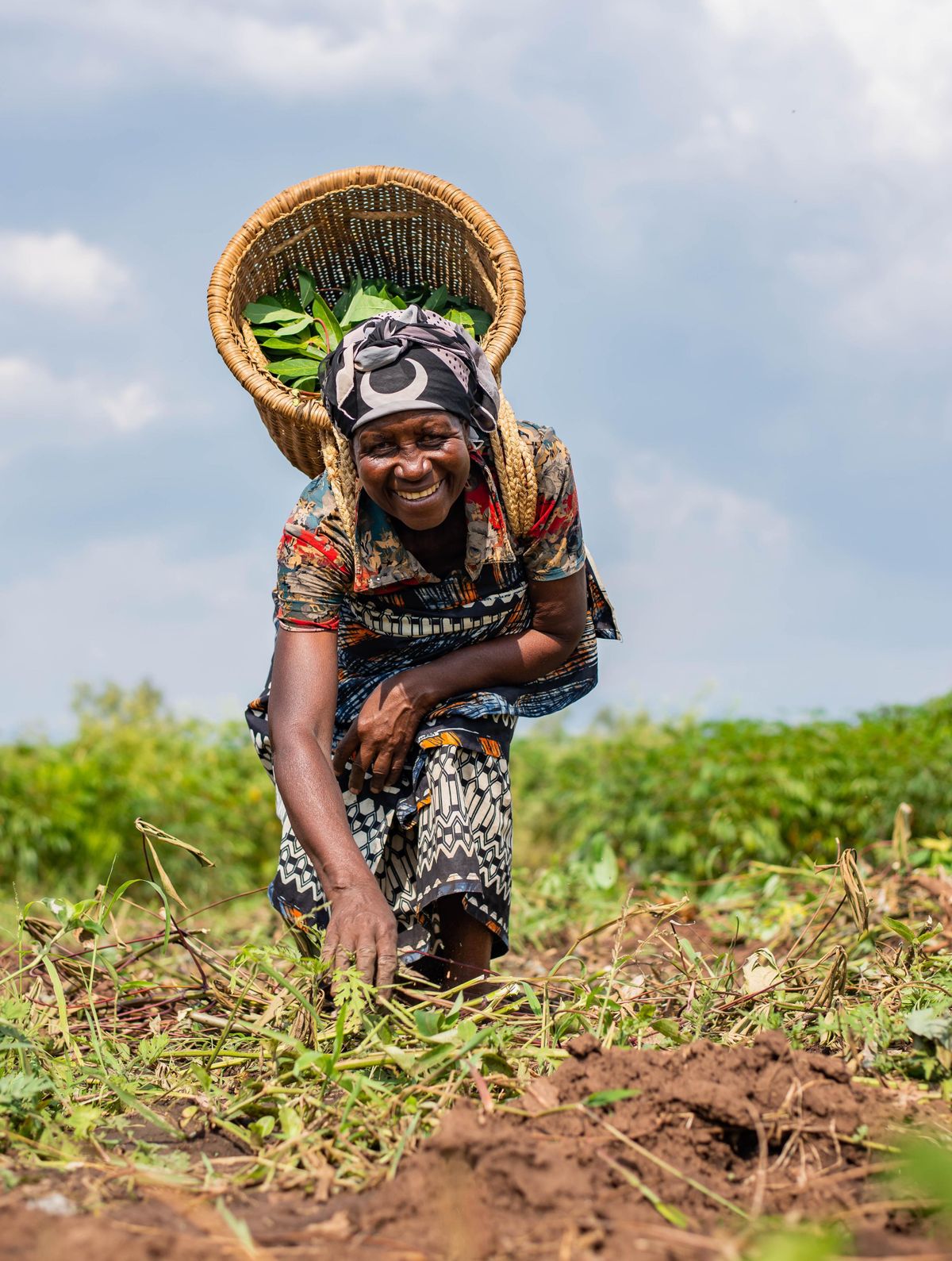
Biomass Collection Centre
What we are looking for. The centre can support the aggregation of suitable agricultural by-products, subject to availability, quality requirements and verification. Commercial suitability depends on volume, moisture, contamination, consistency, location, handling and end use — not every agricultural residue is automatically a viable biomass feedstock.
Why a collection centre matters
A collection centre may look like a relatively simple piece of infrastructure. Economically, it performs several functions at once — turning fragmented rural supply into an organised pathway toward becoming an economic asset.
Bringing fragmented rural supply together into a single, visible point.
Creating a point at which relevant supply information can be recorded and checked.
Reducing the immediate pressure to dispose of agricultural by-products.
Connecting rural supply with larger and more consistent demand.
Creating records around where material comes from and how it moves.
Building the foundation for rigorous MRV around eligible biomass pathways.
The centre is therefore not the end of the model. It is one node in a rural value-retention infrastructure network.
There is something important in changing the language. When we call agricultural by-products waste, we can inadvertently stop asking what they are worth. When we call them biomass, we start asking who can use it, what quality it needs, what infrastructure is missing, and how much value can remain locally.
Muazu Africa is building around that opportunity — not simply to collect waste, and not simply to generate carbon credits, but to build the infrastructure, market connections and information systems that allow rural economies to retain more of the value they already create.
Have biomass to supply, or biomass to source?
Our Ogun State collection centre is open now. Muazu Markets connects rural aggregators, collection points and verified buyers in one place.
Aggregators, collection-centre operators and rural enterprises with a suitable agricultural by-product stream can express interest in supplying through Muazu Markets.
Sell on Muazu Markets →Our Ogun State collection centre is currently open to verified buyers seeking suitable biomass supply.
Request biomass information →“Rural wealth should stay local.”