Muazu Africa Carbon Markets
Published 5 July 2026  ·  9 min read
Rural Pulse Carbon Markets

The Missing Infrastructure Layer Between Rural Africa and Carbon Capital

Voluntary carbon markets are expanding. The rural economies expected to supply most nature-based climate solutions remain under-financed, under-measured, and structurally invisible to that capital. This is a design problem, not a demand problem — and it is the layer Muazu Africa is built to close.

Carbon Markets Climate Finance Women-Led Value Chains Rural Infrastructure
Explore our climate adaptation approach
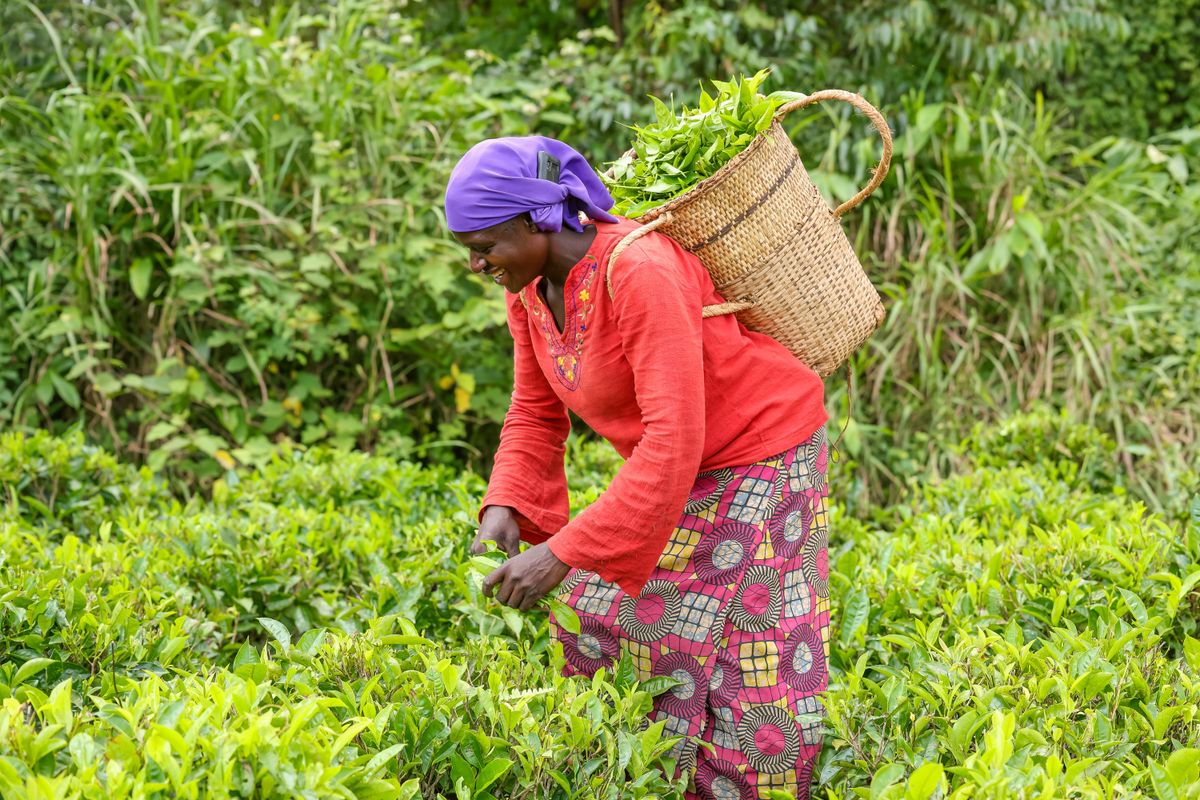
Woman farmer harvesting tea in Taraba, Nigeria
System Diagnosis

Why carbon markets keep missing the rural economies that could supply them

Rural Pulse · Carbon Markets
01

A global market trying to fit a local system

Voluntary carbon markets have become a global asset class, driven by corporate net-zero commitments and rising demand for nature-based solutions — afforestation, agroforestry, soil carbon sequestration. Institutional climate finance tracking consistently shows this demand accelerating.

Beneath that growth sits a structural mismatch. Carbon markets are engineered for standardized production, documented land ownership, digitized data, and centralized verification. Rural African economies run on fragmented smallholder networks, informal land and labor systems, seasonal income cycles, and trust-based coordination.

This implies the failure is architectural, not commercial. A market built for legible, documented supply cannot simply absorb an economy that produces climate value in an undocumented form.

Carbon markets assume
  • Standardized production systems
  • Documented land ownership
  • Digitized agricultural data
  • Centralized verification
Rural Africa operates
  • Fragmented smallholder networks
  • Informal land and labor systems
  • Seasonal, climate-sensitive income
  • Trust-based local coordination
This gap produces what can be called a “high-demand, low-access” climate finance paradox.
02

Nigeria: ambition ahead of infrastructure

Nigeria's climate agenda is increasingly aligned with global decarbonization pathways — anchored by the Climate Change Act (2021) and its updated Nationally Determined Contributions under the Paris Agreement. National adaptation priorities center on agriculture, land use, and the energy transition.

Nigeria has positioned itself as a plausible hub for nature-based carbon projects and climate-smart agriculture. Structurally, though, policy ambition is rising faster than rural market infrastructure. Carbon markets require measurable, verifiable, investable flows. Rural Nigeria still operates largely outside formal Measurement, Reporting, and Verification (MRV) systems.

Policy Anchor
Climate Change Act, 2021 — Nigeria's core legal framework for emissions governance.
Global Alignment
Updated NDCs under the Paris Agreement, prioritizing agriculture and land use.
Structural Gap
Rural production remains largely outside formal MRV coverage.
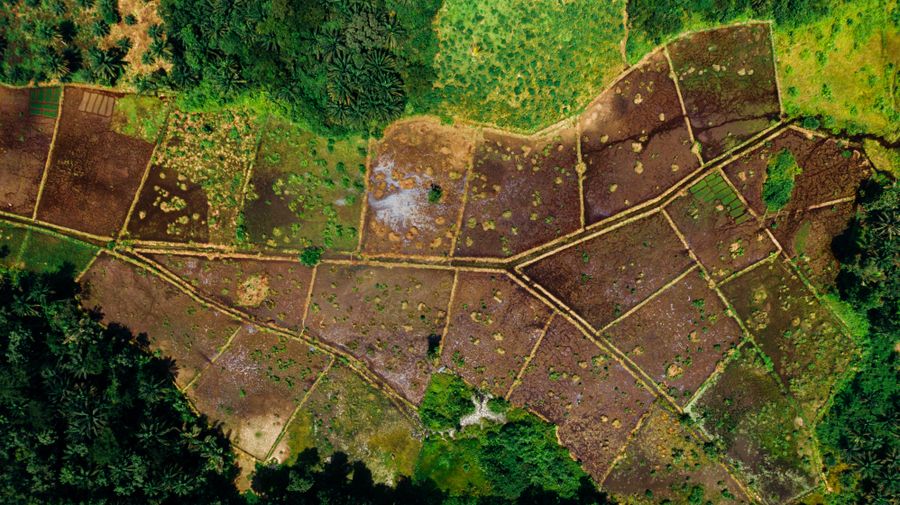
Aerial view of fragmented smallholder farmland
03

Women-led value chains are the invisible climate infrastructure

Africa's climate value does not concentrate in large industrial projects. It sits in smallholder farms, agroforestry systems, and mixed cropping landscapes — coordinated, in practice, by women.

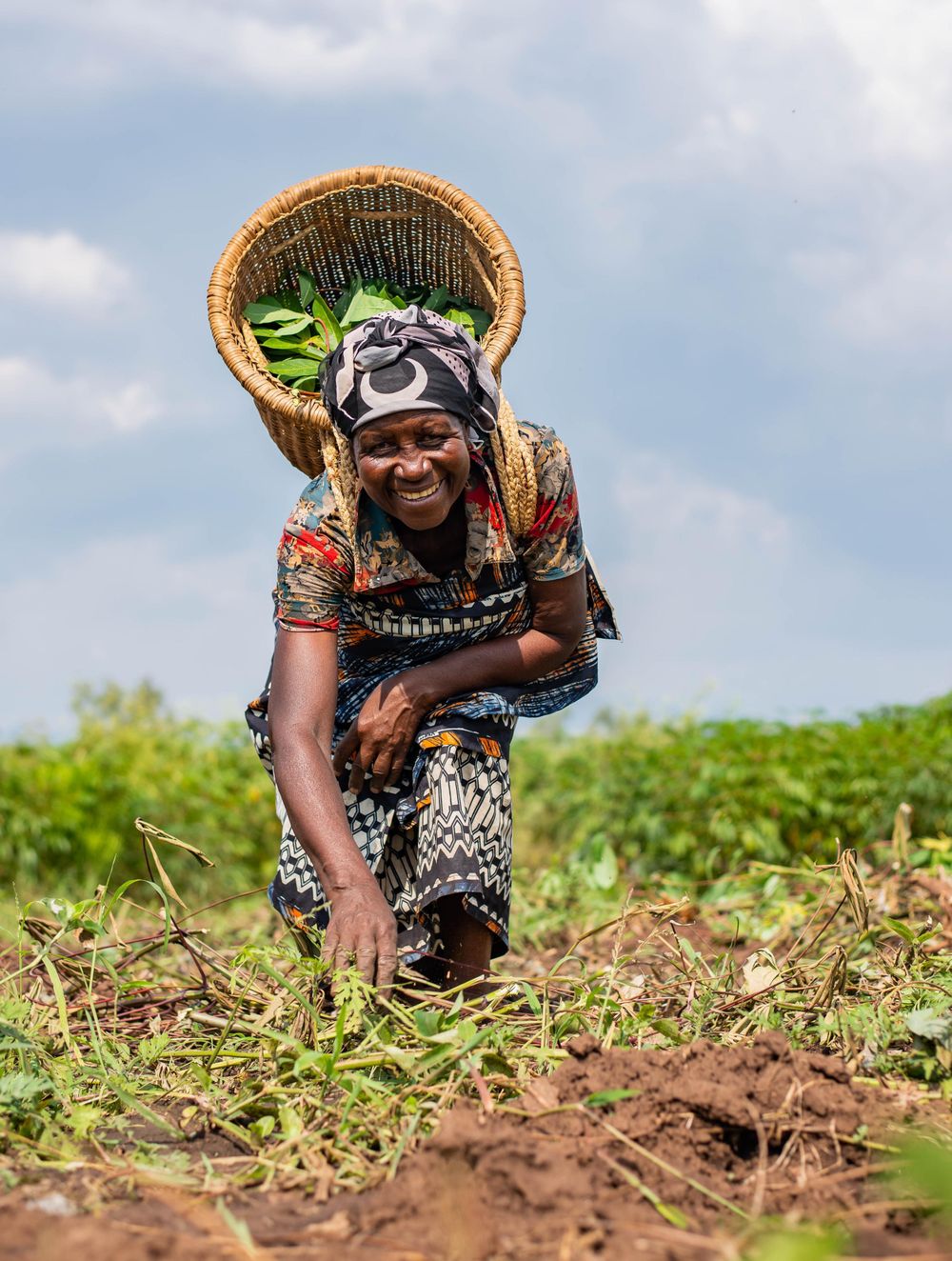
Woman farmer harvesting crops with a basket
Women as Climate Infrastructure

Default system operators of rural climate resilience

Women dominate post-harvest aggregation, local food processing, household-level adaptation decisions, and informal agricultural finance and risk pooling.

Carbon markets rarely recognize this reality: these systems are informal, land access is often communal, and value chains are relational rather than contractual. In practice, the actors most relevant to climate outcomes are the least visible to carbon finance.

04

Where carbon market value leaks

In theory, credits are generated through a simple sequence: establish a baseline, implement an intervention, measure the reduction, issue verified credits. In rural systems, three structural leakages recur along that sequence.

01

Baseline

Emissions scenario modeled from assumptions, not ground-truth rural data.

02

Intervention

Regenerative agriculture, agroforestry, or land restoration is implemented.

03

MRV

Verification via satellite imaging and periodic field audits, at high per-credit cost.

04

Credit Issuance

Intermediaries aggregate fragmented supply into an investable unit.

01

Baseline distortion

Baselines are modeled on assumption rather than verified rural conditions.

02

MRV inefficiency

Satellite and audit-based verification carries high fixed cost per smallholder credit.

03

Aggregation failure

A single farmer is too fragmented a unit to be economically viable; intermediaries capture disproportionate value instead of reinvesting it.

05

From project logic to system infrastructure

Unlocking rural carbon markets at scale requires three infrastructure layers, built together rather than sequentially.

01
Layer

Aggregation Infrastructure

Farmers organized as cooperative clusters and landscape-level, women-led production networks — not isolated projects. This reduces transaction cost and increases scalability.
02
Layer

Hybrid MRV Systems

Satellite macro-monitoring combined with mobile farmer-reported micro-validation, anomaly detection, and periodic human verification — continuous rather than audit-heavy.
03
Layer

Finance & Translation

Intermediaries that structure investment-grade instruments from fragmented rural supply — translating rural production into a legible, investable asset.
06

Mispriced by design, not by demand

Capital allocation in climate finance remains skewed toward large-scale forestry and industrial carbon capture — systems with high certainty of verification. Smallholder agroforestry, soil regeneration, and women-led resilience networks remain comparatively undervalued. The gap is not an absence of value; it is an absence of financial legibility.

Where capital concentrates

Industrial forestry
88%
Carbon capture
76%
Smallholder agroforestry
18%
Women-led networks
9%

Where climate value is produced

Industrial forestry
22%
Carbon capture
14%
Smallholder agroforestry
71%
Women-led networks
64%

Illustrative allocation pattern used to frame the mispricing thesis; directional, not a market survey.

07

Value retention: the missing metric

In most rural carbon systems today, value is extracted at the aggregation layer. Farmers receive a minimal share of credit revenue, and local reinvestment mechanisms stay weak or absent. Without value retention, carbon finance behaves as an extractive flow rather than a regenerative one.

100%Credit revenue generated at market
~45%Retained after intermediary and verification costs
~12%Reaching the producing household or cooperative

Illustrative funnel showing typical leakage from credit sale to producer-level retention in aggregator-heavy rural carbon systems.

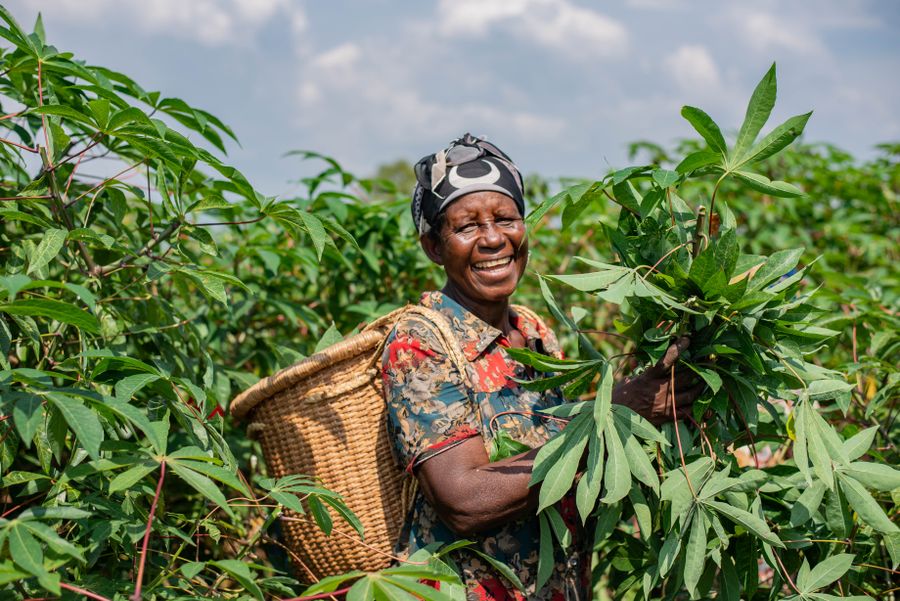
Woman harvesting cassava with a basket
08

Two verticals, one system

Agriculture systems transformation: smallholder aggregation models, women-led value chain strengthening, climate-smart agricultural finance, and formalization without displacement.

Climate finance & carbon markets: carbon asset structuring for rural landscapes, MRV system design, aggregation-to-credit pipelines, and investor-ready climate finance instruments.

Muazu Africa

A venture builder for rural markets, not an observer of carbon markets

Muazu Africa designs the aggregation, MRV, and finance pipelines that translate women-led agricultural and climate-adaptation activity into investment-grade rural infrastructure.

NGO Consultancy Project Developer
Rural Venture Builder Climate Finance Architect Rural-to-Capital Translator

More on our climate adaptation approach to financing rural markets →

“The climate solution already exists. What’s missing is the infrastructure to make it investable.”

Rural Pulse — Carbon Markets